Gut problems are common. Getting answers should not be hard.
Evidence-based books, free toolkits and a free app by Dr Michael Klein.


What is bothering you most?

The Gut Health Series
Seven short books. One complete manual.

Bloating and Gas
What causes it, what to check with your doctor, and a six-step plan
Coming soon
Constipation and Sluggish Bowels
What is normal, what to check with your doctor, and a seven-step plan
Coming soon
Living with IBS
Pain, urgency and unpredictable bowels: what IBS is, what to rule out first, and seven steps that help
Coming soon
Gut and Mood
The gut-brain connection, and a six-step plan built on tested treatments
Coming soon
Weight, Cravings and Energy
The biology behind them, what to rule out first, and a 14-day plan
Coming soon
Heartburn and Reflux
What reflux is, which warning signs need a doctor, and a 14-day plan
Coming soon
Antibiotics and Your Gut
What antibiotics do to your gut, the red flags, and seven steps to help it recover
Coming soon
The Gut Health Manual
Support your gut health naturally
The complete manualComing soon


Free. No subscriptions
The companion app
GutClarity™
Every diary and tracker in the books, on your phone.
- Score your symptoms and log meals and bowel movements in a few taps.
- Follow the plan by ticking off the steps of each 14-day plan.
- See your own pattern in charts, ready to show your doctor.
- Your entries are stored on your phone. An optional reminder each day.

50. free downloads
Free toolkits
Printable tools for your own problem.
Checklists, symptom diaries and progress trackers, one set for each book. Print them, or fill them in on screen.
How every book works
Try one step. Track what happens. Identify triggers.

Check the red flags first
Every book opens with the warning signs that mean seeing a doctor before trying anything.
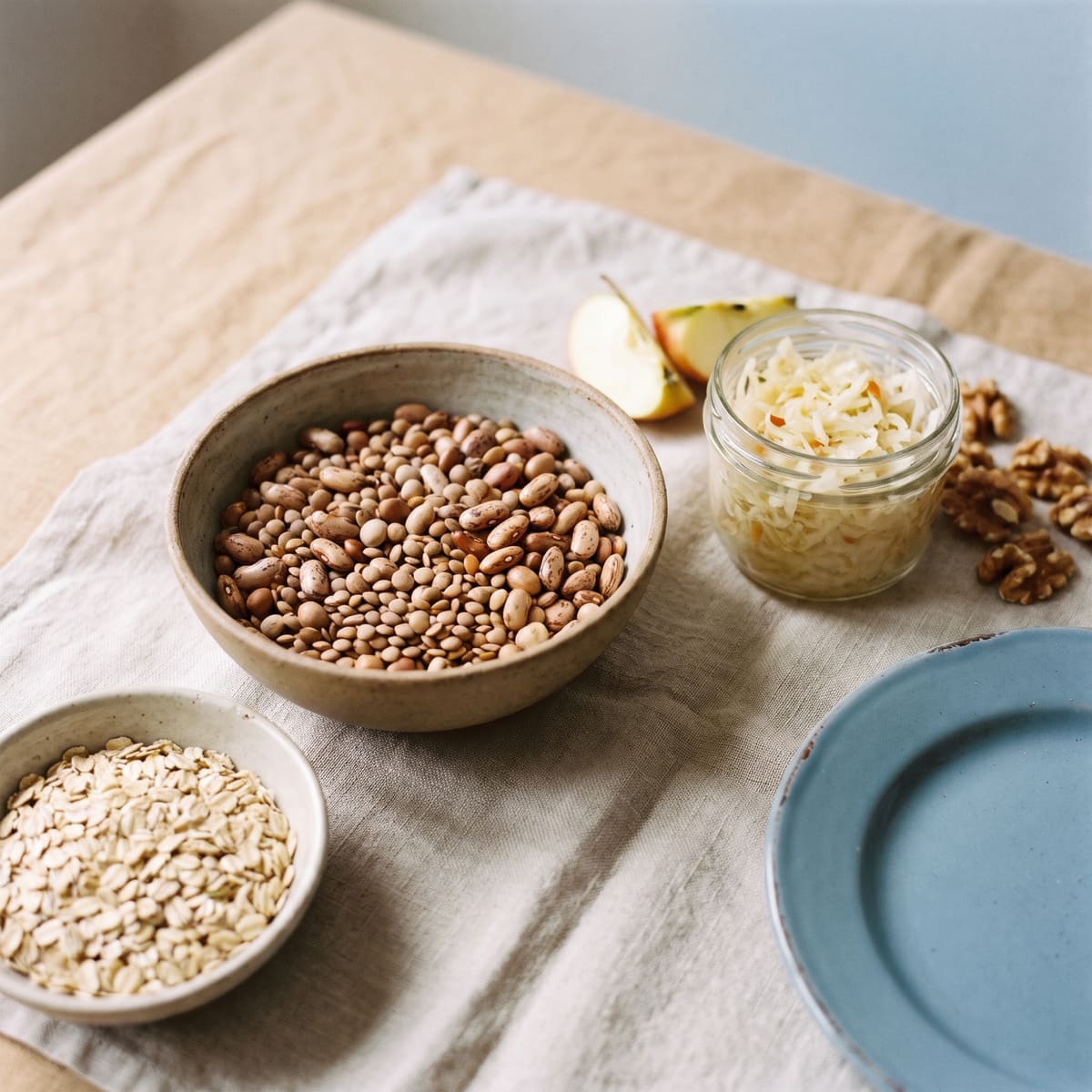
Try one step at a time
A short, graded plan with simple, affordable changes. No fad diets, no expensive pills.

Track it and take it to your doctor
Diaries, checklists and charts show your own pattern, so appointments start from facts.


The evidence
Claims are labelled based on the strength of the underlying evidence.
A claim from a large trial and a claim from a lab study are not the same thing, so we try to point that out where we can. We have used five ‘evidence-strength’ labels.
- Strong
Several good randomised controlled trials, confirmed in meta-analyses.
- Moderate
At least one good randomised trial, or several smaller trials pointing the same way.
- Early
Small or laboratory studies, or traditional use with a plausible mechanism.
- Expert advice
Recommended by specialist guidelines on the basis of experience rather than trials.
- Not supported
Tested and found not to help, or advised against by specialists.

About the author
A bit about me…
I am a medical doctor and a business executive who has spent close to three decades in pharmaceutical research. That work has seen me live in South Africa, Australia and Singapore, where my three wonderful children were born, and it gave me the honour of serving on the African, Asian and European boards of two multinational pharmaceutical companies.
Much of my professional life came down to one discipline: reading data closely. Clinical trials exist to separate what works from what we would like to work, and I spent years drawing insights out of them.
I have written this manual the way I was trained to read evidence. The books attempt to call out the strength or weakness of the various claims and recommendations, based on the published evidence.
Readers say
Love that myths are separated from the latest published scientific data